Recognising Taonga with AI
Facial Recognition for Kākā Conservation Management
Overview
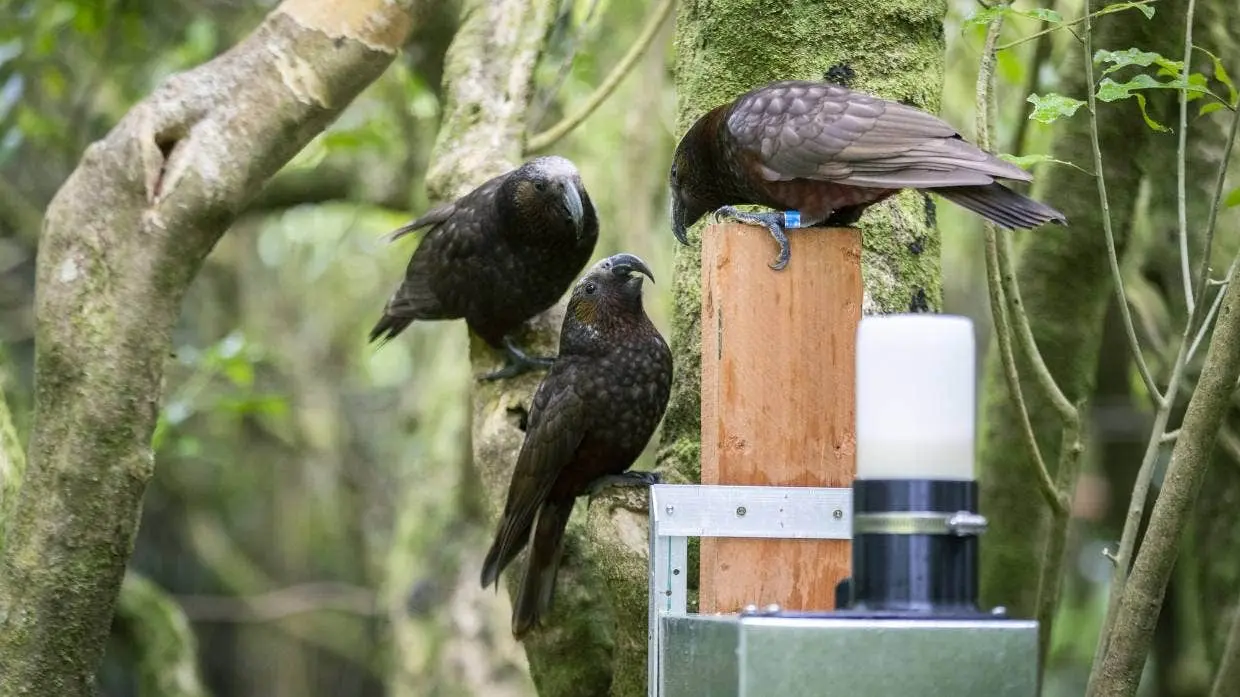
This project develops AI tools for conservation monitoring of threatened bird populations, using Wellington's kākā as our case study. Traditional methods like leg banding are essential for understanding population dynamics and disease transmission, but they are resource-intensive and stressful for the animals. Our goal is to show that computer vision can offer a non-invasive, scalable alternative — recognising and re-identifying individual birds from images and video, without any physical tagging.
Approach
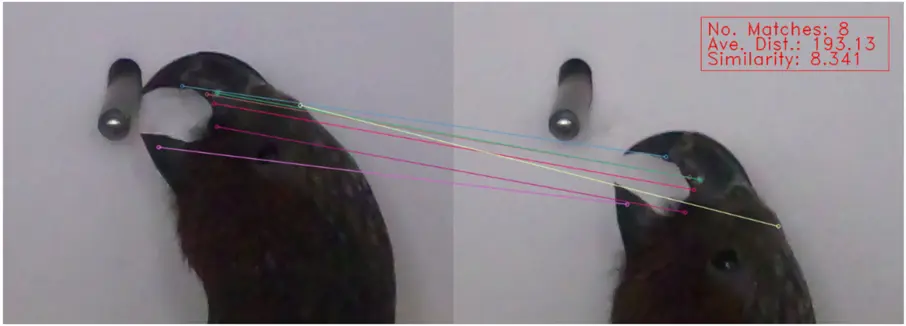
We use unsupervised machine learning, a departure from methods that depend on tagged or pre-labelled individuals — an unrealistic expectation in wild populations. Birds also often lack the distinctive markings that make re-identification easier in other species, which makes this a genuinely hard computer-vision problem. Our early work demonstrated that beak morphology can be used to match images of the same kākā, and more recent work has extended this to video captured at a custom-built feeder.
Progress
We have built and deployed a smart feeder that records video of visiting kākā, and developed a pipeline that automatically extracts high-quality key frames from that footage for re-identification. The pipeline combines object detection (YOLO and Grounding DINO), optical-flow blur detection, DINOv2 image encoding, and clustering to select representative frames, then re-identifies individuals with high accuracy. This gives us a foundation for scaling up to more diverse and challenging real-world settings.
Cultural context
Aligned with Vision Mātauranga, the project engages with Māori cultural values and expertise, recognising kākā as taonga. Knowledge generated is shared with conservation practitioners and iwi, whose feedback shapes the research and supports the rekindling of biocultural relationships.
Why it matters
Modern conservation ecology is data-driven, and the most valuable data is at the level of the individual animal. Traditional monitoring is prohibitively expensive for most conservation groups, and with initiatives like Predator Free 2050 expected to grow bird populations significantly, manual methods will not scale. A non-invasive, AI-driven approach could make individual-level monitoring feasible and affordable, while improving bird welfare and supporting coexistence between people and kākā. We hope the approach can extend to other parrots, such as kea, and to other native birds.
We've been featured in the media: Purpose-built facial recognition software aims to identify individual kākā and How artificial intelligence may help NZ birds.
Selected outputs
- Maddigan, P., Ehrhardt, O., Lensen, A., & Shaw, R.C. (2025). Re-Identifying Kākā with AI-Automated Video Key Frame Extraction. arXiv:2510.08775
See the publications page for the full list.
Project Team

Dr Andrew Lensen
Senior Lecturer in Artificial Intelligence
Dr Rachael Shaw
Senior Lecturer in Behavioural Ecology
Kahurangi Cronin
Researcher

Paula Maddigan
Researcher
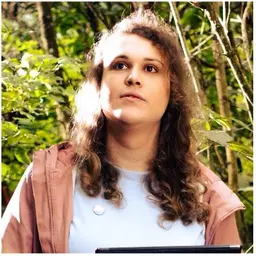
Abigail Clennell
MSc Student
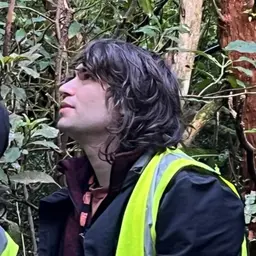
Ryan Jaggers
MSc Student
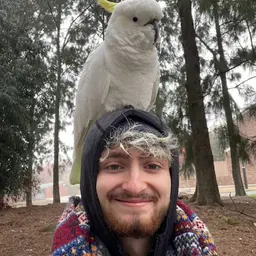
Fraser Campbell
PhD student

Nicolas Samelson
PhD student
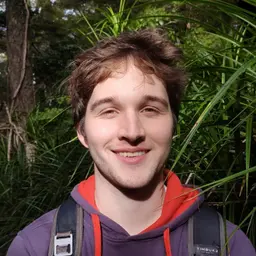
Fintan O'Sullivan
Summer scholar '21–'22 and BSc (Hons) '22
Oskar Ehrhardt
Summer scholar '22–'23 and 3rd-year project '23